Cricket developed over centuries rather than appearing in a single finished form. The game is strongly associated with south-east England, where early versions were played before it became an organized adult sport. Clubs, written laws, county competition, empire, broadcasting and limited-overs innovation then carried cricket far beyond its original setting.
Quick reference
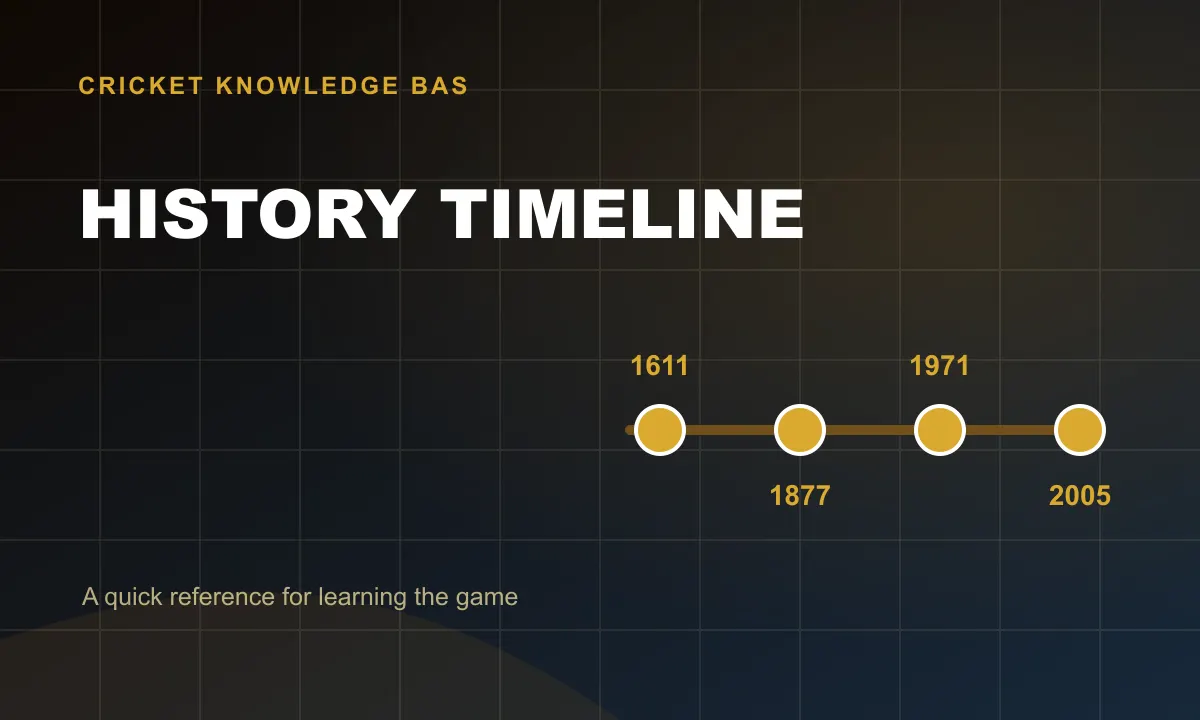
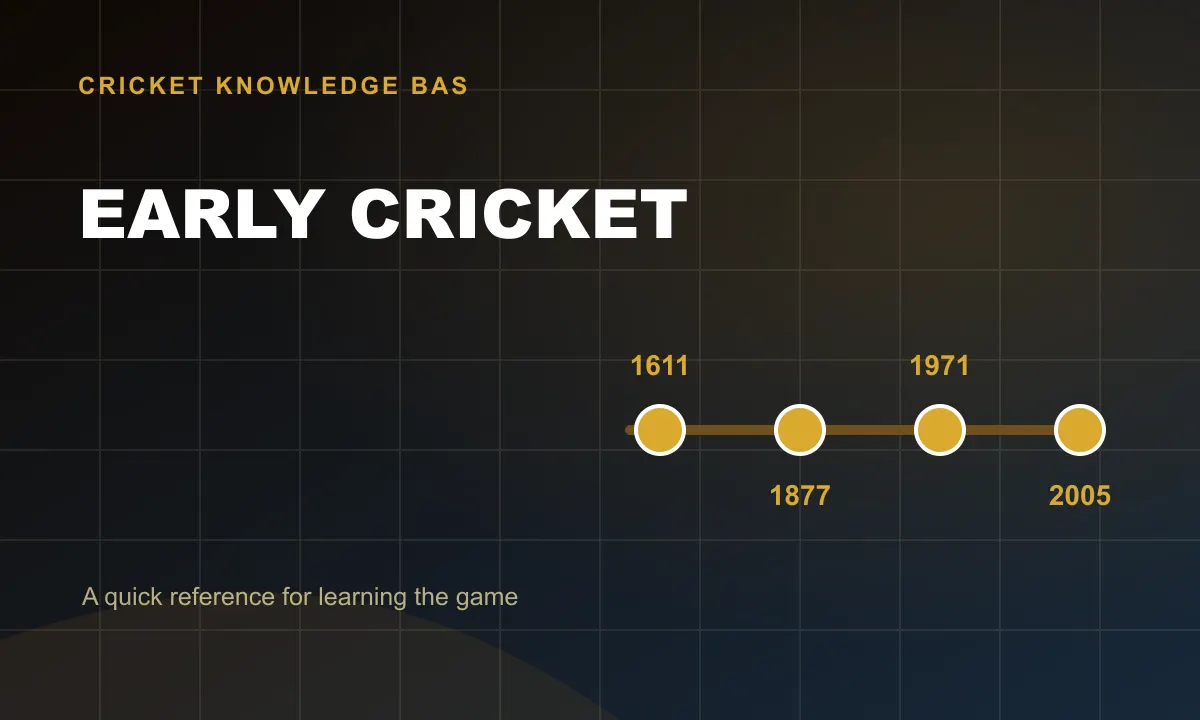
| Probable early region | The Weald in south-east England |
|---|---|
| Adult reference | 1611 |
| First recognized international | USA v Canada, 1844 |
| First Test | Australia v England, 1877 |
| First ODI | 1971 |
| T20 international era | Began in the mid-2000s |
Early cricket and the first written evidence
Expert opinion commonly places cricket’s early development among children in the Weald during Saxon or Norman times, though an exact inventor and date are unknown. The ICC’s historical account notes a 1611 reference to cricket as an adult sport and a dictionary description of it as a boys’ game in the same year.
By the middle of the seventeenth century, village cricket was established. Local experts began to be employed, early county sides emerged, and patrons supported matches. The game was moving from informal recreation toward organized competition.
Clubs, laws and first-class growth
The eighteenth century produced influential clubs and more consistent rules. The Marylebone Cricket Club, founded in 1787, became the custodian of the Laws of Cricket. Standardization made it easier for teams from different places to play under shared expectations.
During the nineteenth century, improved transport, newspapers and urban crowds helped major matches grow. The first recognized international match was played by the United States and Canada in 1844, and English professionals toured North America in 1859.
The rise of Test cricket
The match between Australia and England at Melbourne in 1877 is recognized as the first Test. The Ashes rivalry followed in the 1880s and helped create a powerful international narrative. Other nations gradually entered Test cricket as the sport became institutionalized.
Test cricket’s multi-day, two-innings structure preserved the game’s demands of technique, endurance and adaptation. National teams became important symbols in many societies, particularly across South Asia, the Caribbean, southern Africa and the Pacific.

Limited overs and the modern era
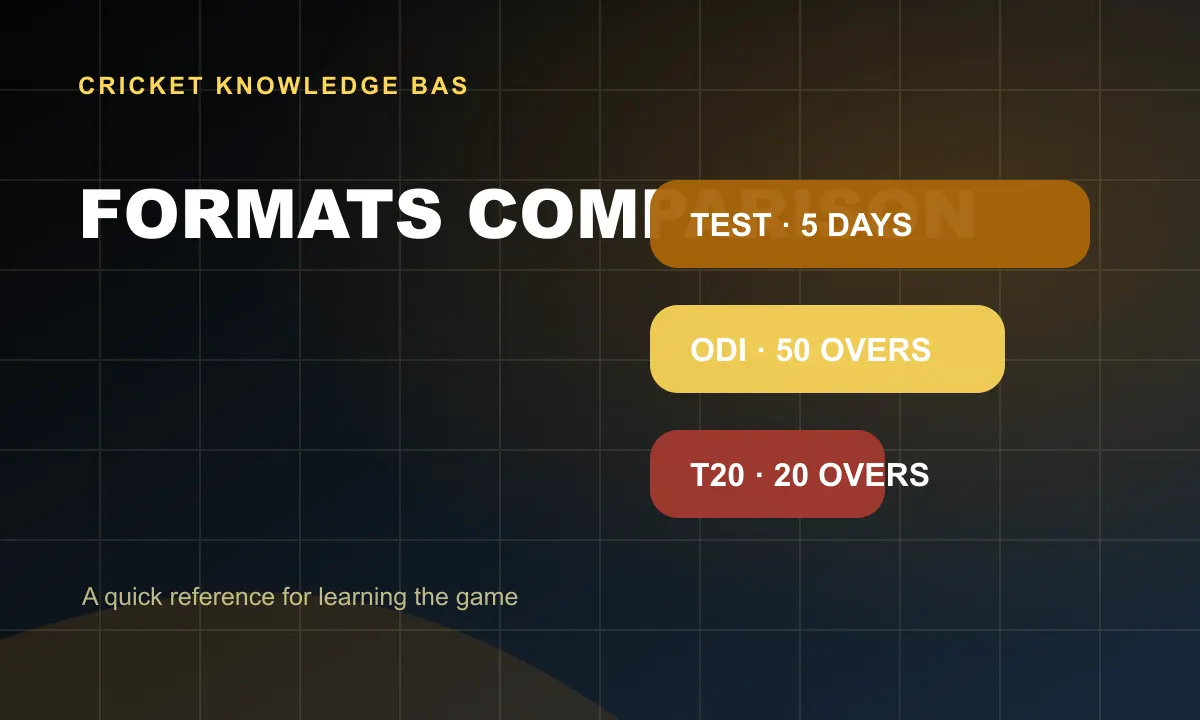
One Day Internationals began in 1971 and the men’s Cricket World Cup followed in 1975. Colored clothing, floodlights, television graphics and fielding restrictions changed how cricket was presented and played. The format made an international contest fit within a day.
Twenty20 reduced an innings to 20 overs and reached international cricket in the mid-2000s. Domestic leagues, digital streaming and short-form highlights accelerated its reach. The modern game now supports three international formats, each rewarding a different balance of risk, time and skill.
How to learn this topic faster
Historical claims become clearer when you separate surviving evidence from later tradition. A documented match, a formal championship and a famous rivalry are different milestones. Use dates as anchors, but also ask what changed in institutions, transport, media or public participation. Cricket usually grew through gradual adoption rather than one sudden invention.
For History of Cricket, connect early cricket and the first written evidence with clubs, laws and first-class growth. The first idea gives you the structure; the second shows how players or institutions act inside it. Then return to the quick-reference facts and explain each one in your own words. If a fact cannot yet be explained, follow the linked guide rather than memorizing the label.
A useful learning routine is to predict the next event before it happens. In a rules article, predict the umpire’s sequence. In a format article, predict how the batting side will spend its remaining balls. In history, predict which institution or technology made the next stage possible. Prediction turns passive reading into a test of understanding.
Key checkpoints
- Probable early region: The Weald in south-east England. Use this as a checkpoint when reading a scorecard, watching a match or explaining the topic to someone else.
- Adult reference: 1611. Use this as a checkpoint when reading a scorecard, watching a match or explaining the topic to someone else.
- First recognized international: USA v Canada, 1844. Use this as a checkpoint when reading a scorecard, watching a match or explaining the topic to someone else.
- First Test: Australia v England, 1877. Use this as a checkpoint when reading a scorecard, watching a match or explaining the topic to someone else.
- First ODI: 1971. Use this as a checkpoint when reading a scorecard, watching a match or explaining the topic to someone else.
- T20 international era: Began in the mid-2000s. Use this as a checkpoint when reading a scorecard, watching a match or explaining the topic to someone else.
Common misconceptions
Origin stories are often simplified into one inventor, one date or one competition. Early games usually developed through communities before records became consistent. It is also misleading to treat cricket’s spread as passive copying: local clubs and players changed its style, institutions and cultural meaning.
When two sources appear to disagree about history of cricket, check their date, match format and definition. One may describe an older playing condition, a domestic variation or a different category of competition. Prefer the current MCC Laws and the relevant official playing conditions for formal decisions, and label uncertainty clearly in historical questions.
A practical example
Frequently asked questions
Who invented cricket?
No single inventor is known; the game evolved over time, probably in south-east England.
When was the first international match?
The USA and Canada played the first recognized international in 1844.
When was the first Test match?
Australia and England played at Melbourne in 1877.
When did ODI cricket begin?
The first ODI was played in 1971.
When did T20 cricket begin?
Domestic T20 began in the early 2000s and Twenty20 Internationals followed in the mid-2000s.
Conclusion
Cricket’s history is a process of adaptation: local game to codified sport, imperial export to national culture, and multi-day contest to three international formats. Its continuity comes from the delivery-by-delivery contest, while its survival comes from the ability to change around that core.
Primary references
Rules and format details should always be checked against the current match or competition playing conditions.