Cricket is a bat-and-ball team sport built around a simple contest: a bowler delivers the ball, a batter tries to score, and fielders try to end the batter’s innings. That contest repeats across an innings and creates a game of placement, patience, speed and strategy. The vocabulary can make cricket look complicated from the outside, but the basic flow becomes clear once you understand the pitch, the two teams and the exchange between runs and wickets.
Quick reference
| Teams | Two teams, normally 11 players each |
|---|---|
| Core contest | Bowler versus batter |
| Scoring unit | Runs |
| Main dismissals | Bowled, caught, LBW, run out and stumped |
| International formats | Test, ODI and T20I |
| Governing laws | The Laws of Cricket maintained by MCC |
The basic idea of cricket
One team bats while the other bowls and fields. Two batters are on the pitch at the same time, one at each end. The striker faces the delivery and may score by running to the opposite end or by hitting the ball to the boundary. A four is usually awarded when the ball reaches the boundary after touching the ground; a six is awarded when it clears the boundary on the full.
The fielding team uses a bowler, a wicketkeeper and nine other fielders to control scoring and take wickets. After six valid deliveries, an over is complete and another bowler operates from the opposite end. This alternating pattern is the heartbeat of an innings.
The pitch, wickets and players
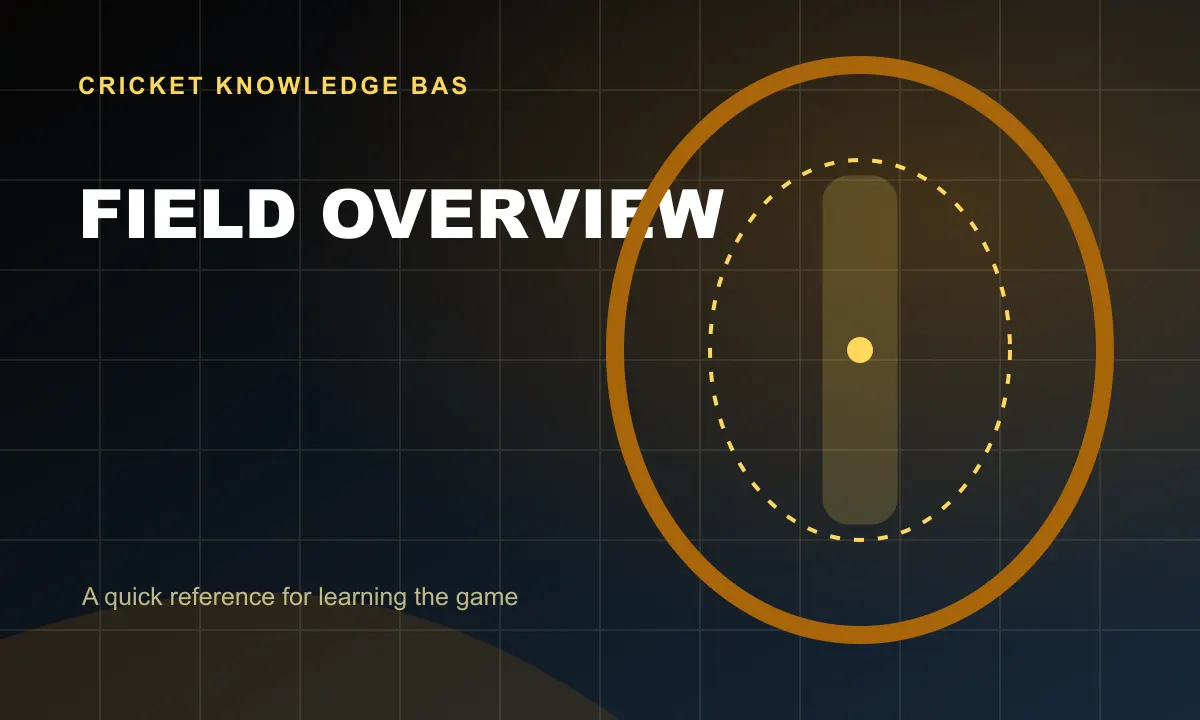
The central pitch is a narrow rectangular strip with a wicket at each end. Each wicket is made of three stumps topped by two bails. Crease markings around the wickets help umpires decide run-outs, stumpings and whether a delivery is legal. The rest of the oval playing area gives batters room to place shots and fielders space to defend.
Cricket rewards specialization. Opening batters often handle the newest ball, middle-order players build or accelerate an innings, bowlers use pace or spin, and the wicketkeeper stands behind the striker’s wicket. Captains arrange the field and choose bowlers according to the batter, match format and state of the game.
How a team wins
A side’s score combines runs made from the bat with extras such as wides, no-balls, byes and leg byes. An innings ends when the allotted overs are completed, the batting side loses ten wickets, a target is reached, or a declaration or other format-specific condition applies. The next innings begins with the teams swapping roles.
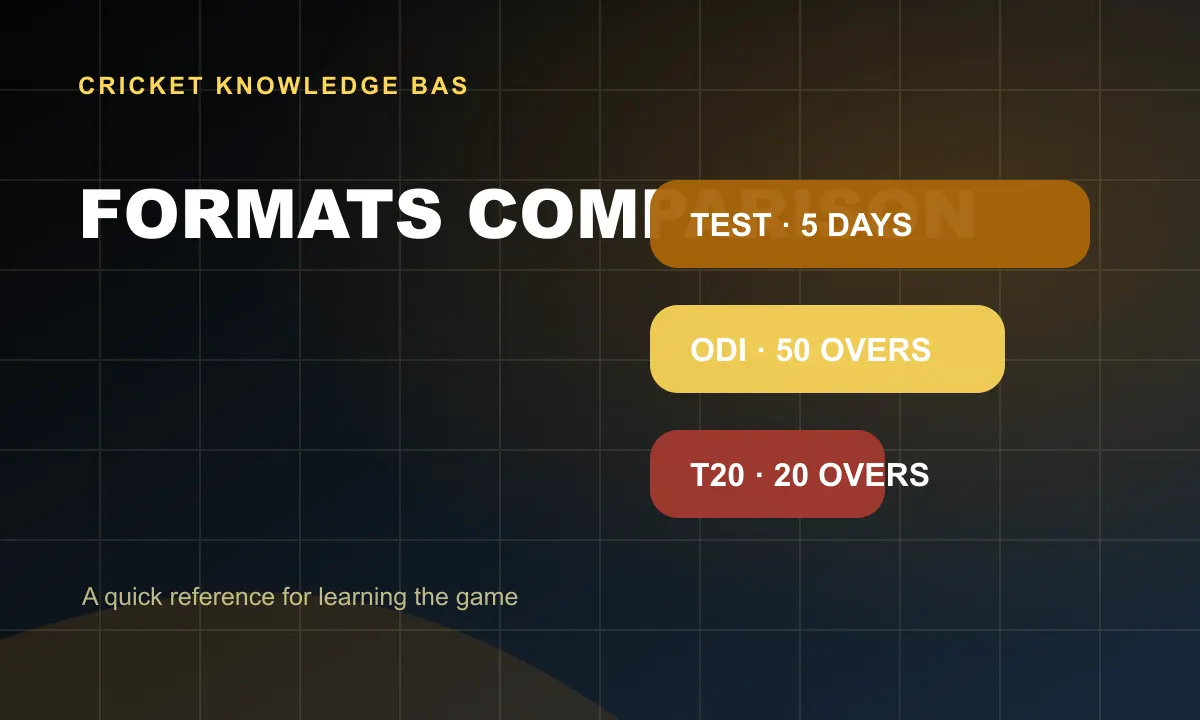
In limited-overs cricket, the side with more runs after its allocation wins. In Test cricket, both teams normally have two innings and a win requires dismissing the opposition twice while staying ahead on runs. A Test can also finish as a draw when time expires before a result is completed.
Why cricket is a tactical game
Every delivery carries a choice. The bowler selects pace, line, length and movement; the batter chooses attack, defence or leave; the captain adjusts the field to make certain shots safer or riskier. A quiet sequence of dot balls can create pressure just as a boundary can change momentum.
Conditions matter too. A hard surface may reward fast bowling and stroke play, a dry worn pitch may help spin, and cloud or humidity can assist swing. Formats change the acceptable level of risk, so a patient Test innings and an explosive T20 cameo can both represent excellent cricket.
How to learn this topic faster
Watch one short passage of play and narrate only the visible sequence: delivery, contact, run or dot ball, and any wicket. This prevents unfamiliar commentary from hiding the simple contest. On a second viewing, add field position and intent. Layering observations in this order builds a reliable mental model without requiring a law-book memory test.
For What Is Cricket? A Complete Beginner’s Guide, connect the basic idea of cricket with the pitch, wickets and players. The first idea gives you the structure; the second shows how players or institutions act inside it. Then return to the quick-reference facts and explain each one in your own words. If a fact cannot yet be explained, follow the linked guide rather than memorizing the label.
A useful learning routine is to predict the next event before it happens. In a rules article, predict the umpire’s sequence. In a format article, predict how the batting side will spend its remaining balls. In history, predict which institution or technology made the next stage possible. Prediction turns passive reading into a test of understanding.
Key checkpoints
- Teams: Two teams, normally 11 players each. Use this as a checkpoint when reading a scorecard, watching a match or explaining the topic to someone else.
- Core contest: Bowler versus batter. Use this as a checkpoint when reading a scorecard, watching a match or explaining the topic to someone else.
- Scoring unit: Runs. Use this as a checkpoint when reading a scorecard, watching a match or explaining the topic to someone else.
- Main dismissals: Bowled, caught, LBW, run out and stumped. Use this as a checkpoint when reading a scorecard, watching a match or explaining the topic to someone else.
- International formats: Test, ODI and T20I. Use this as a checkpoint when reading a scorecard, watching a match or explaining the topic to someone else.
- Governing laws: The Laws of Cricket maintained by MCC. Use this as a checkpoint when reading a scorecard, watching a match or explaining the topic to someone else.
Common misconceptions
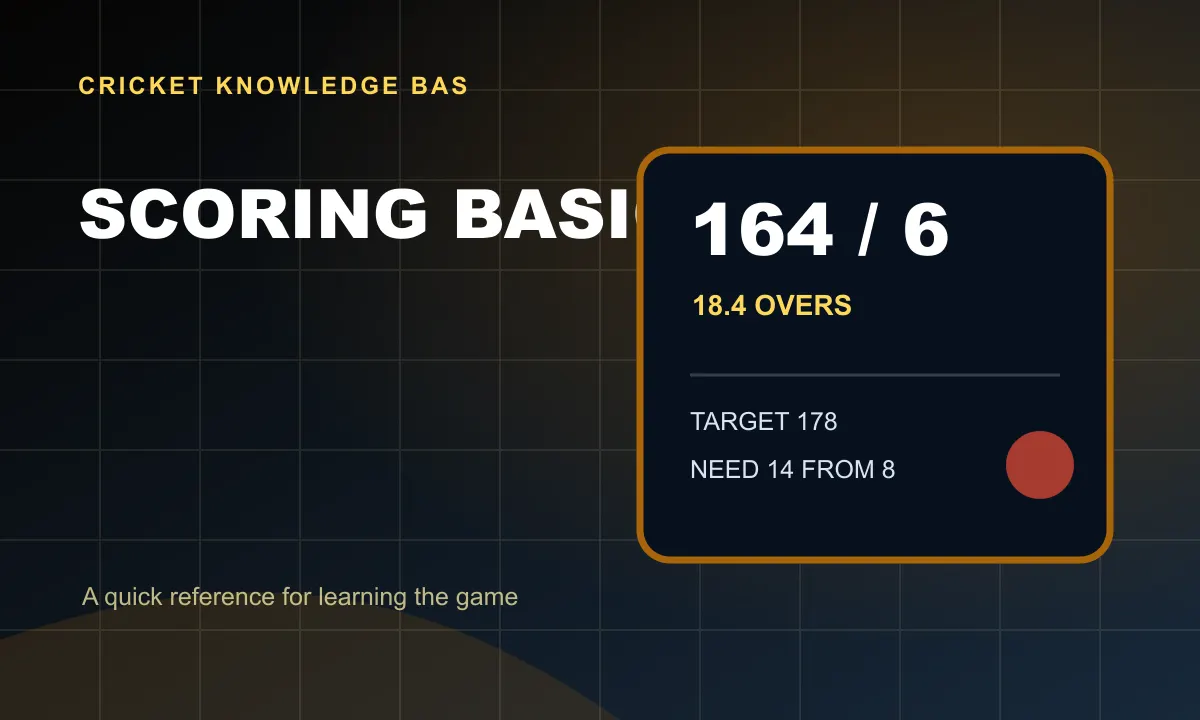
A common beginner mistake is to measure every action by excitement. A leave, defensive stroke or quiet over can be valuable when it protects a wicket or creates pressure. Another mistake is reading over notation as a decimal: 12.4 overs means 12 complete overs and four valid balls, not twelve and four-tenths.
When two sources appear to disagree about what is cricket, check their date, match format and definition. One may describe an older playing condition, a domestic variation or a different category of competition. Prefer the current MCC Laws and the relevant official playing conditions for formal decisions, and label uncertainty clearly in historical questions.
A practical example
Frequently asked questions
What is the main aim of cricket?
Score more runs than the opposition while using wickets and legal deliveries to limit its score.
How many players are in a cricket team?
A standard side has 11 nominated players, although junior and recreational formats may use modified numbers.
How long does cricket last?
A T20 usually takes about three hours, an ODI roughly a day, and a Test match can be scheduled for up to five days.
What is a wicket?
The word can mean the three stumps and two bails, a batter’s dismissal, or informally the pitch itself.
Is cricket difficult to learn?
The full laws are detailed, but a beginner can follow most matches by first learning runs, overs, wickets and the three main formats.
Conclusion
Cricket is easiest to understand as a repeated duel inside a team contest. Learn the purpose of an over, how runs are made and why wickets matter, then watch a short-format match with the scorecard open. The details will begin to attach themselves to a simple and satisfying structure.
Primary references
Rules and format details should always be checked against the current match or competition playing conditions.