The Laws of Cricket provide a universal framework, while competition playing conditions adapt that framework for formats such as Tests, ODIs and T20s. For a beginner, the useful approach is to understand the structure first: two teams, alternating innings, legal deliveries, run scoring and dismissals. Details such as powerplays and review systems then fit into place.
Quick reference
| Law-making authority | MCC maintains the Laws of Cricket |
|---|---|
| Standard side | 11 players |
| Over | Six valid deliveries |
| Boundary values | Normally four and six |
| Common extras | No-ball, wide, bye, leg bye and penalty runs |
| Common dismissals | Bowled, caught, LBW, run out and stumped |
Teams, toss and innings
A match is played between two sides. Before play, the captains conduct a toss and the winner chooses to bat or field, subject to competition rules. The batting side sends two players to the pitch; the fielding captain uses a bowler, wicketkeeper and other fielders to take wickets and restrict runs.
An innings continues until its overs are completed, ten wickets fall, a target is reached, the captain declares where permitted, or another applicable condition ends it. Teams then exchange roles. Limited-overs matches normally provide one innings per team, while Tests normally provide two.
Legal balls, overs and extras
A bowler delivers six valid balls to complete an over. The action, foot placement and delivery must satisfy the laws. A no-ball gives the batting side an immediate one-run penalty and the delivery does not count in the over. A ball judged too wide for the striker to play with a normal stroke is called wide and also adds an extra.
Byes occur when a legal ball passes the bat and body and the batters run. Leg byes may be scored after the ball contacts the batter under specified conditions. These extras increase the team total without being credited as ordinary runs to the batter.
Scoring and boundaries
A run is normally completed when both batters cross and make good their ground at the opposite ends while the ball is live. Batters can turn for additional runs, but a failure to ground correctly can create a short run. Fielders may attempt a run-out by breaking the wicket while a batter is outside their ground.
A boundary allowance is usually four when the ball reaches the boundary after touching the ground and six when a ball struck by the bat clears it on the full. Local ground conditions can define unusual boundary arrangements, so umpires confirm them before play.
Dismissals and umpire decisions
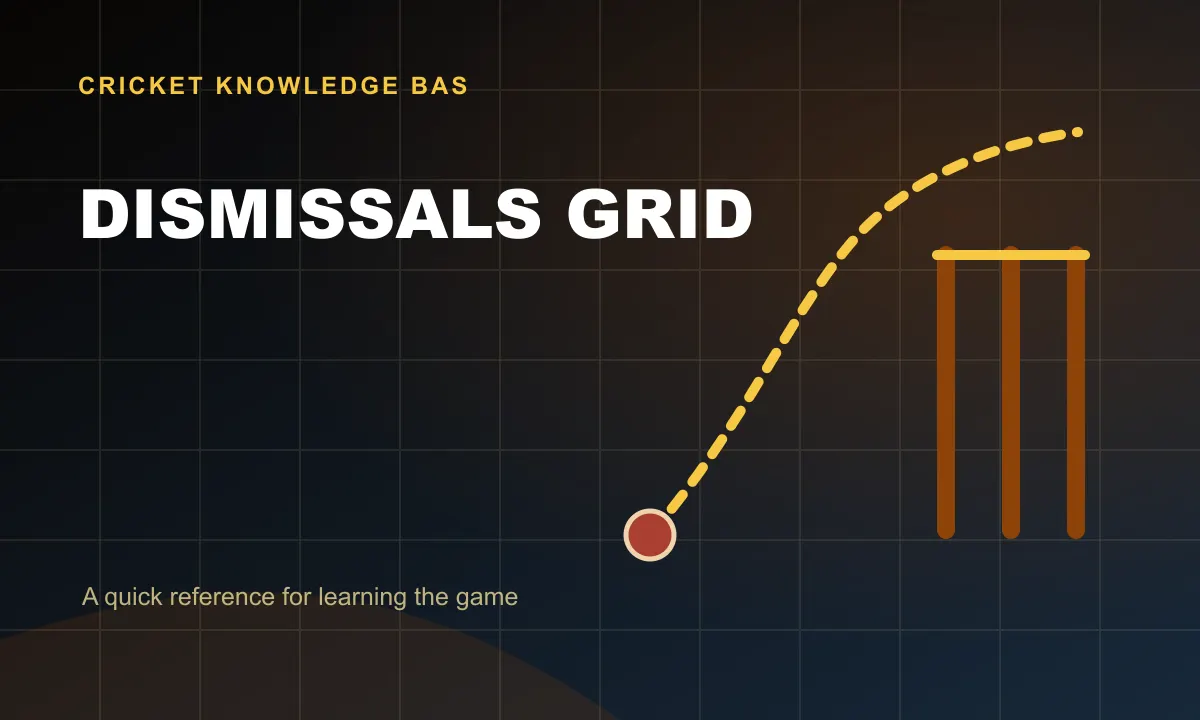
Bowled occurs when a fair delivery breaks the striker’s wicket. Caught requires a fielder to control the ball from the bat before it touches the ground. LBW applies when a fair ball is illegally stopped by the batter’s person and a series of conditions show it would otherwise have hit the wicket.
Run out and stumped depend on the batter being outside their ground when the wicket is fairly put down. The fielding side normally appeals, and umpires make decisions based on the laws and any available review system. Fair play and respect for decisions sit within cricket’s stated Spirit of Cricket.
How to learn this topic faster
Treat every ruling as a sequence rather than a slogan. First establish whether the ball was legal, then identify what happened while it was live, and finally apply the dismissal or scoring condition. For a formal match, the competition’s current playing conditions sit beside the Laws and may control field restrictions, reviews, free hits or rain adjustments.
For Cricket Rules Explained, connect teams, toss and innings with legal balls, overs and extras. The first idea gives you the structure; the second shows how players or institutions act inside it. Then return to the quick-reference facts and explain each one in your own words. If a fact cannot yet be explained, follow the linked guide rather than memorizing the label.
A useful learning routine is to predict the next event before it happens. In a rules article, predict the umpire’s sequence. In a format article, predict how the batting side will spend its remaining balls. In history, predict which institution or technology made the next stage possible. Prediction turns passive reading into a test of understanding.
Key checkpoints
- Law-making authority: MCC maintains the Laws of Cricket. Use this as a checkpoint when reading a scorecard, watching a match or explaining the topic to someone else.
- Standard side: 11 players. Use this as a checkpoint when reading a scorecard, watching a match or explaining the topic to someone else.
- Over: Six valid deliveries. Use this as a checkpoint when reading a scorecard, watching a match or explaining the topic to someone else.
- Boundary values: Normally four and six. Use this as a checkpoint when reading a scorecard, watching a match or explaining the topic to someone else.
- Common extras: No-ball, wide, bye, leg bye and penalty runs. Use this as a checkpoint when reading a scorecard, watching a match or explaining the topic to someone else.
- Common dismissals: Bowled, caught, LBW, run out and stumped. Use this as a checkpoint when reading a scorecard, watching a match or explaining the topic to someone else.
Common misconceptions
Do not apply one remembered phrase without the surrounding conditions. A ball hitting the pad is not automatically LBW, a physical delivery is not automatically a valid ball, and an apparent boundary may still depend on how the ball reached or crossed the rope. Umpires decide the complete event, not a cropped replay frame.
When two sources appear to disagree about cricket rules explained, check their date, match format and definition. One may describe an older playing condition, a domestic variation or a different category of competition. Prefer the current MCC Laws and the relevant official playing conditions for formal decisions, and label uncertainty clearly in historical questions.
A practical example
Frequently asked questions
Who writes the rules of cricket?
MCC is the custodian of the Laws; governing bodies such as the ICC publish playing conditions for their competitions.
How many legal balls are in an over?
Six.
Can a no-ball take a wicket?
Most dismissal methods do not apply, although run out, obstructing the field and hit the ball twice can still apply under the Laws.
Can cricket end in a draw?
Yes, in multi-day cricket when time expires without a completed win; a tie is different because scores finish level under the applicable result conditions.
What is the Spirit of Cricket?
A principle that places responsibility for fair play on captains and extends it to players, officials, coaches and others involved.
Conclusion
Cricket’s laws are detailed because they govern many possible events, but the visible game rests on a compact foundation. Follow innings, valid balls, runs and dismissals. Then check the playing conditions when a format-specific question—such as powerplays, reviews or free hits—arises.
Primary references
Rules and format details should always be checked against the current match or competition playing conditions.