The number of overs depends on the format. A full T20 innings is normally limited to 20 overs and a full ODI innings to 50. Test cricket is scheduled by days and sessions rather than a fixed innings over limit, although teams and officials work to daily over requirements under the playing conditions.
Quick reference
| One over | Six valid balls |
|---|---|
| T20 | 20 overs per side |
| ODI | 50 overs per side |
| Test | No fixed innings over limit |
| The Hundred | Uses balls rather than traditional overs in its branding |
| Shortened match | Overs may be reduced |
How an over works
The same bowler delivers six valid balls from one end of the pitch. After the over, the umpires change ends and a different bowler normally begins the next over from the other end. A bowler cannot deliver consecutive overs, which forces captains to manage a group of bowlers.
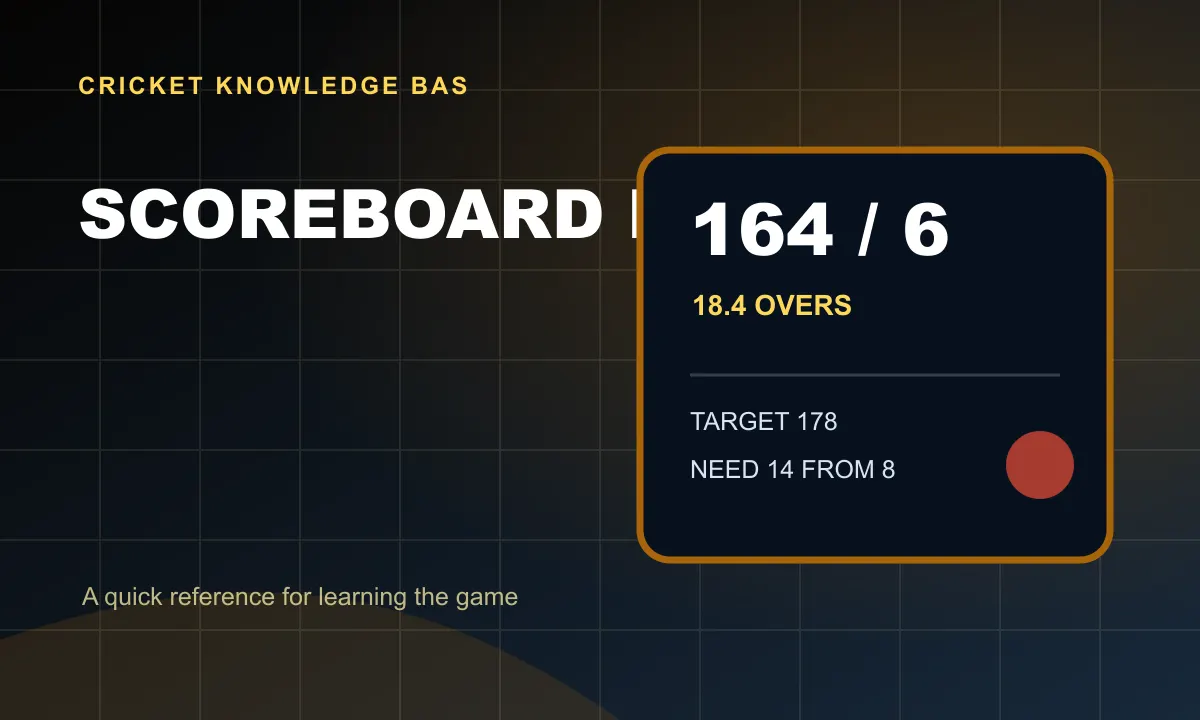
Wides and no-balls add extras and generally do not count among the six valid balls. That is why a single over may contain seven, eight or more physical deliveries. Score notation such as 14.3 means 14 complete overs and three valid balls.
Overs in T20 and ODI matches
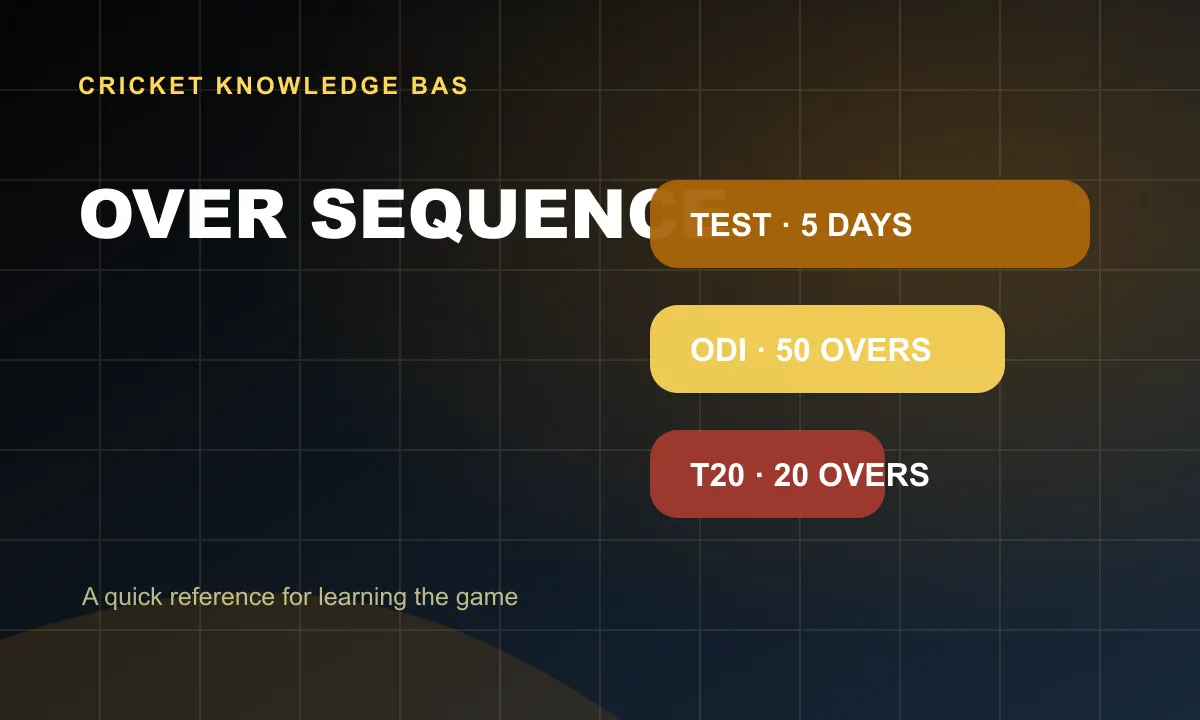
T20 gives each side up to 20 overs in a full innings. The short allocation encourages higher scoring rates and specialized phases: opening powerplay, middle-over matchups and death-over hitting. Individual bowlers are commonly limited to four overs in a full T20 innings.
ODI cricket gives each side up to 50 overs. It allows more time to rebuild after wickets and creates a longer tactical arc. Individual bowlers are commonly limited to ten overs in a full ODI innings, preventing one dominant bowler from operating throughout.
Why Test cricket is different
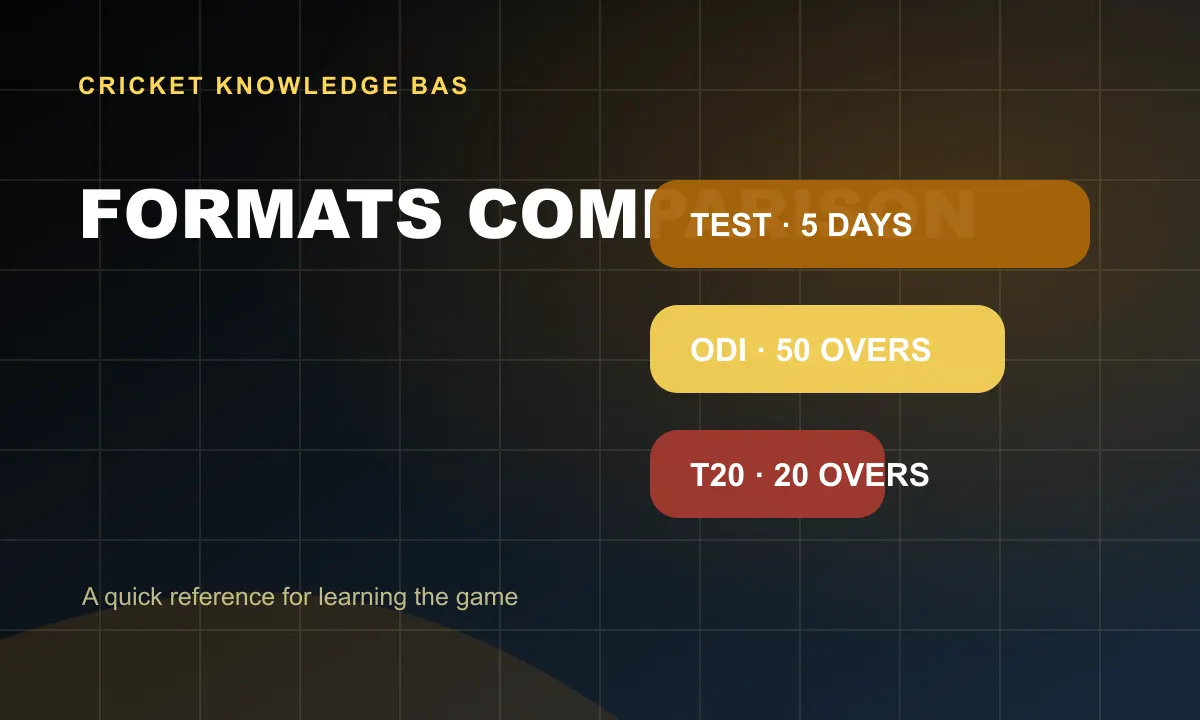
A Test match can be scheduled for up to five days, with each side normally entitled to two innings. An innings has no preset maximum number of overs. It ends through dismissals, declaration, forfeiture, a completed chase or the end of available match time.
Daily play is organized into sessions and governed by time and over-rate provisions. Weather, light, wickets and tactical choices influence how many overs are actually bowled. A Test can end in a draw if time expires before a winning result.
Rain, delays and reduced overs
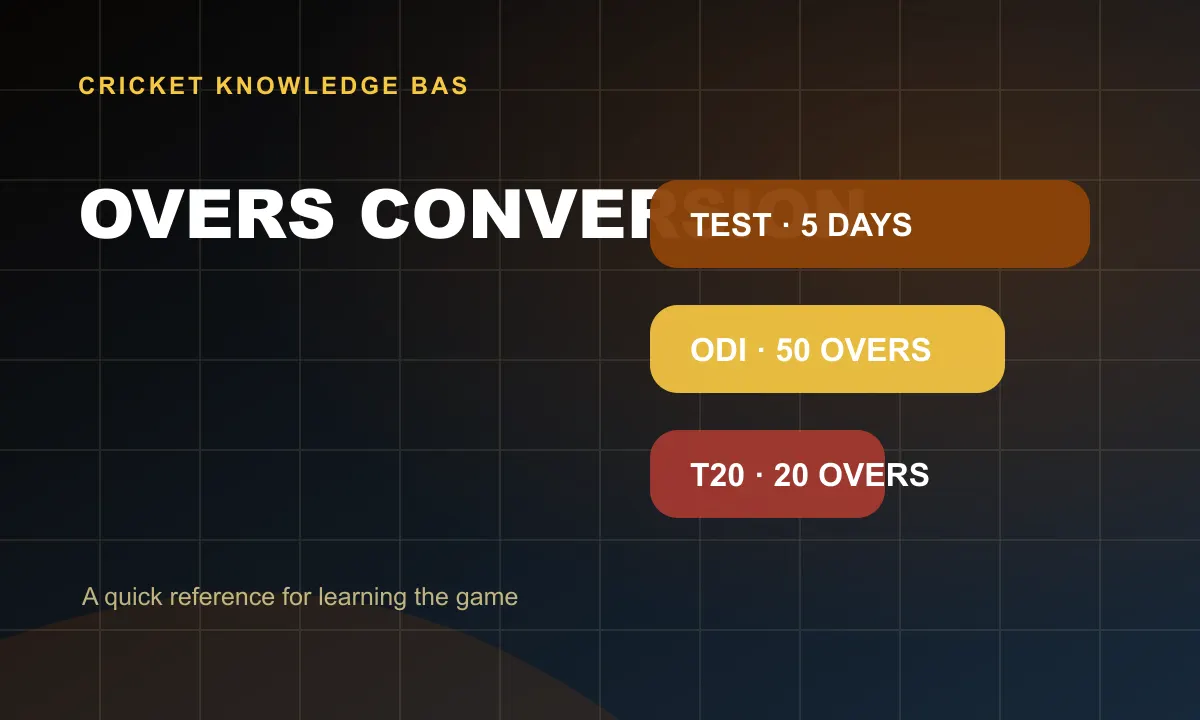
Limited-overs matches may be shortened when weather or other interruptions remove playing time. Officials recalculate the number of overs and, where necessary, adjust the chase target using the competition’s prescribed method. Powerplay lengths and bowler limits may also change.
Do not assume a match described as T20 will always reach 20 overs per side. The label describes the maximum standard allocation. A valid result can sometimes be produced from a shorter innings if the minimum conditions in the playing regulations are met.
How to learn this topic faster
Treat every ruling as a sequence rather than a slogan. First establish whether the ball was legal, then identify what happened while it was live, and finally apply the dismissal or scoring condition. For a formal match, the competition’s current playing conditions sit beside the Laws and may control field restrictions, reviews, free hits or rain adjustments.
For How Many Overs Are in Cricket?, connect how an over works with overs in t20 and odi matches. The first idea gives you the structure; the second shows how players or institutions act inside it. Then return to the quick-reference facts and explain each one in your own words. If a fact cannot yet be explained, follow the linked guide rather than memorizing the label.
A useful learning routine is to predict the next event before it happens. In a rules article, predict the umpire’s sequence. In a format article, predict how the batting side will spend its remaining balls. In history, predict which institution or technology made the next stage possible. Prediction turns passive reading into a test of understanding.
Key checkpoints
- One over: Six valid balls. Use this as a checkpoint when reading a scorecard, watching a match or explaining the topic to someone else.
- T20: 20 overs per side. Use this as a checkpoint when reading a scorecard, watching a match or explaining the topic to someone else.
- ODI: 50 overs per side. Use this as a checkpoint when reading a scorecard, watching a match or explaining the topic to someone else.
- Test: No fixed innings over limit. Use this as a checkpoint when reading a scorecard, watching a match or explaining the topic to someone else.
- The Hundred: Uses balls rather than traditional overs in its branding. Use this as a checkpoint when reading a scorecard, watching a match or explaining the topic to someone else.
- Shortened match: Overs may be reduced. Use this as a checkpoint when reading a scorecard, watching a match or explaining the topic to someone else.
Common misconceptions
Do not apply one remembered phrase without the surrounding conditions. A ball hitting the pad is not automatically LBW, a physical delivery is not automatically a valid ball, and an apparent boundary may still depend on how the ball reached or crossed the rope. Umpires decide the complete event, not a cropped replay frame.
When two sources appear to disagree about how many overs, check their date, match format and definition. One may describe an older playing condition, a domestic variation or a different category of competition. Prefer the current MCC Laws and the relevant official playing conditions for formal decisions, and label uncertainty clearly in historical questions.
A practical example
Frequently asked questions
How many balls are in 20 overs?
Normally 120 valid balls.
How many balls are in 50 overs?
Normally 300 valid balls.
Why can an over contain more than six deliveries?
Wides and no-balls generally do not count as valid balls.
Is 10.5 overs the same as ten and a half overs?
No. It means ten completed overs and five balls of the next over.
How many overs are in a Test innings?
There is no fixed maximum; the innings is governed by wickets, declarations, results and time.
Conclusion
Remember three anchors: six valid balls make an over, T20 provides 20 overs per side, and ODI provides 50. Test cricket replaces an innings over cap with time and two-innings strategy. From there, shortened-match rules explain most exceptions.
Primary references
Rules and format details should always be checked against the current match or competition playing conditions.