One Day International cricket gives each team one innings of up to 50 overs. First played in 1971, the format sits between the long strategic horizon of Tests and the compressed intensity of T20. It asks teams to manage 300 valid balls with enough caution to preserve wickets and enough urgency to build a winning total.
Quick reference
| Overs | 50 per side |
|---|---|
| Valid balls | Up to 300 per innings |
| Innings | One per team |
| Typical duration | One day |
| Bowler maximum | Commonly ten overs in a full innings |
| Major event | ICC Cricket World Cup |
The 50-over structure
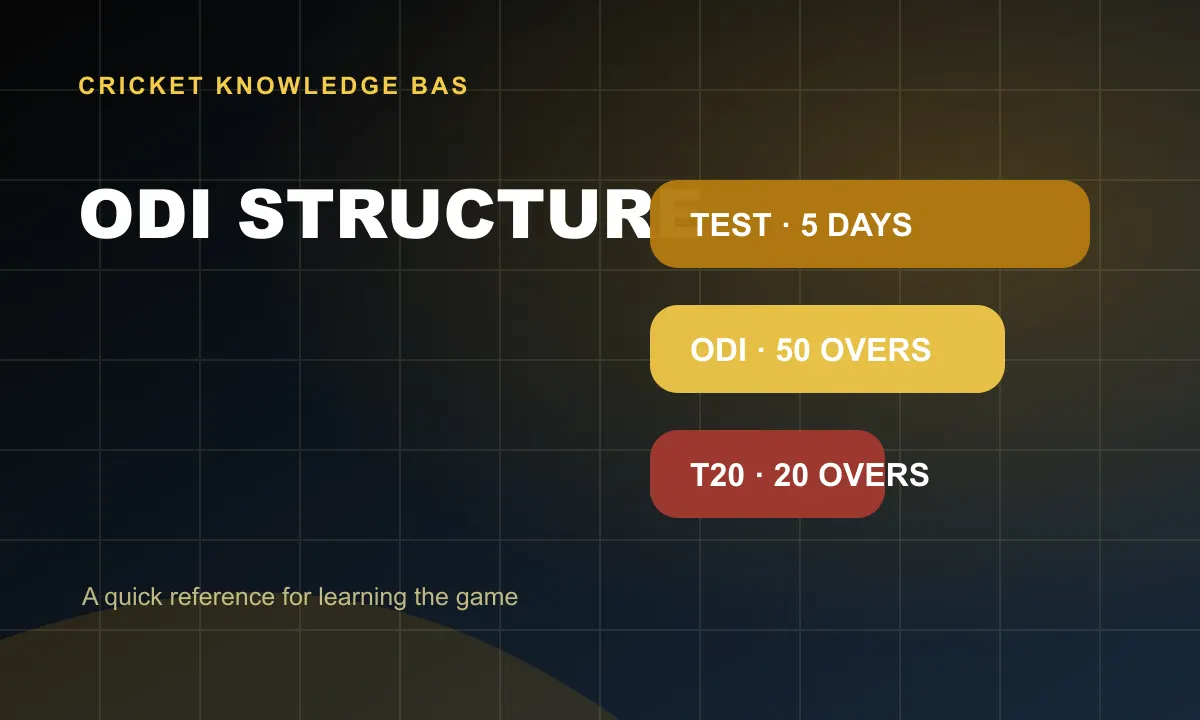
The first team bats until it completes 50 overs or its innings ends earlier. The second team then chases one more than the first total. An innings of 50 overs contains up to 300 valid deliveries, giving batters time to build partnerships.
A bowler is commonly limited to ten overs in a full innings, so at least five bowling options are needed. Captains distribute those overs according to the new ball, middle-overs control and the high-pressure finish.
Powerplay, middle overs and death overs
The opening powerplay restricts boundary fielders and encourages assertive batting. The middle overs often feature spin, rotation of strike and attempts to break partnerships. The final ten overs usually bring greater boundary intent and specialized death bowling.
These labels are tactical rather than separate games. A wicket cluster can force rebuilding, while a strong platform can bring acceleration earlier. The best ODI sides change tempo without losing control.
Building and chasing a total
Batting first requires estimating a competitive score for the pitch, ground and opposition. Wickets are a resource: preserving them enables greater risk later, but excessive caution can leave unused scoring opportunity.
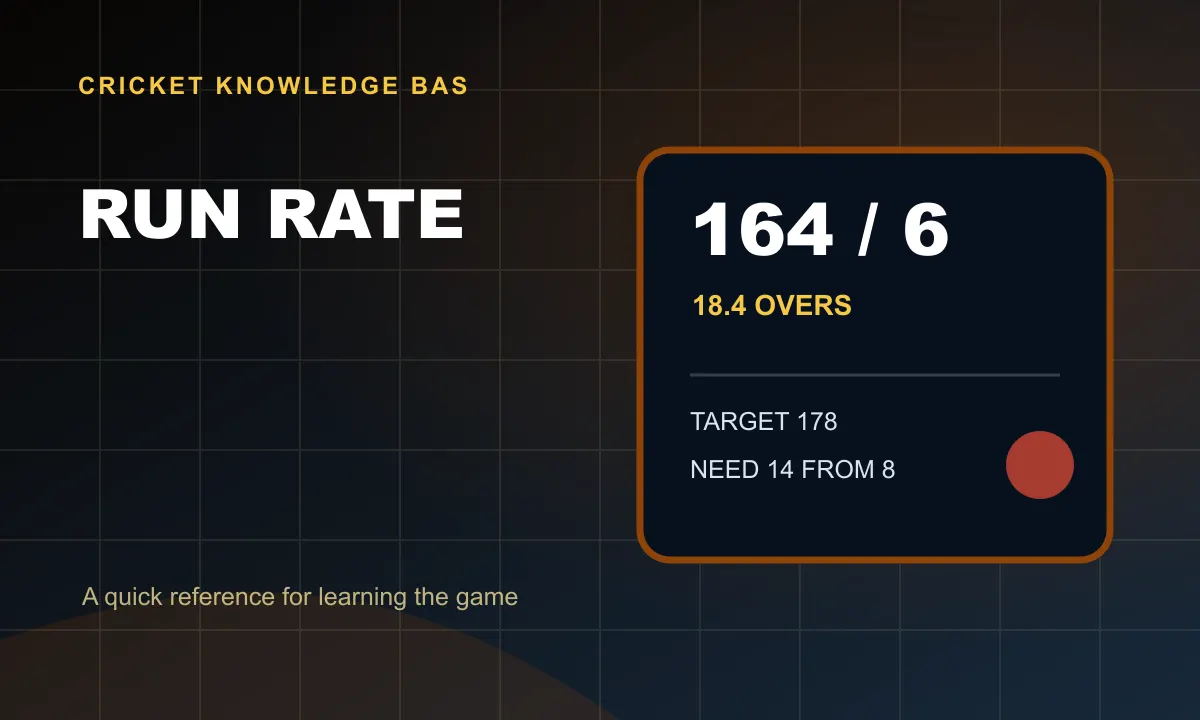
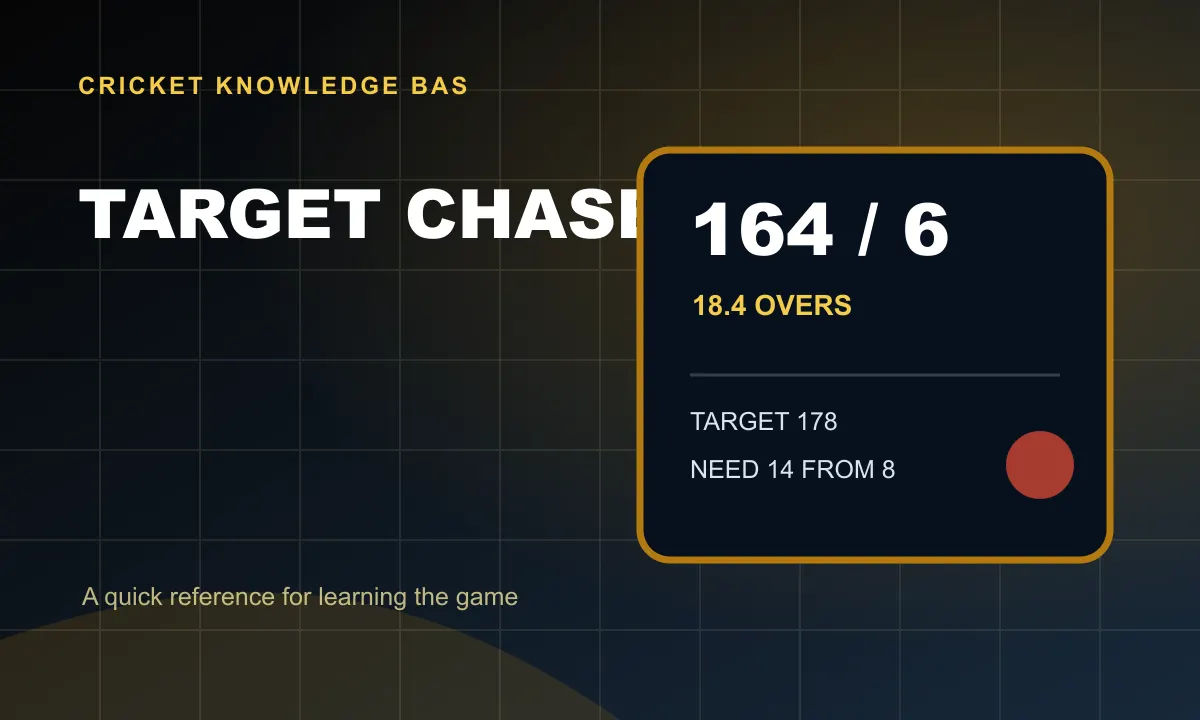
A chase provides a known target. Required run rate offers a guide, though wickets, boundary size and remaining bowlers affect the true difficulty. Good chases prevent the required rate from rising beyond the lineup’s realistic hitting capacity.
Rain and revised targets
Interruptions can reduce overs and change the resources available to one or both sides. Competitions use an approved calculation method to revise targets rather than relying on a simple proportional reduction.
Powerplay lengths and bowler limits may also be adjusted. Viewers should use the official target displayed for the match because the calculation accounts for more than overs alone.
How to learn this topic faster
Compare formats by resources rather than by stereotypes. Count balls, wickets, innings and available time, then ask how quickly those resources must be converted into runs. A choice that appears defensive in one format may be an intelligent response to conditions; a choice that looks exciting may leave too many unused risks later.
For What Is ODI Cricket?, connect the 50-over structure with powerplay, middle overs and death overs. The first idea gives you the structure; the second shows how players or institutions act inside it. Then return to the quick-reference facts and explain each one in your own words. If a fact cannot yet be explained, follow the linked guide rather than memorizing the label.
A useful learning routine is to predict the next event before it happens. In a rules article, predict the umpire’s sequence. In a format article, predict how the batting side will spend its remaining balls. In history, predict which institution or technology made the next stage possible. Prediction turns passive reading into a test of understanding.
Key checkpoints
- Overs: 50 per side. Use this as a checkpoint when reading a scorecard, watching a match or explaining the topic to someone else.
- Valid balls: Up to 300 per innings. Use this as a checkpoint when reading a scorecard, watching a match or explaining the topic to someone else.
- Innings: One per team. Use this as a checkpoint when reading a scorecard, watching a match or explaining the topic to someone else.
- Typical duration: One day. Use this as a checkpoint when reading a scorecard, watching a match or explaining the topic to someone else.
- Bowler maximum: Commonly ten overs in a full innings. Use this as a checkpoint when reading a scorecard, watching a match or explaining the topic to someone else.
- Major event: ICC Cricket World Cup. Use this as a checkpoint when reading a scorecard, watching a match or explaining the topic to someone else.
Common misconceptions
Shorter does not mean easier, and longer does not mean inactive. T20 compresses choices and punishes small errors; Test cricket creates pressure through time, changing surfaces and repeated plans. ODI cricket is not merely the midpoint—it has its own 50-over resource pattern and tactical phases.
When two sources appear to disagree about odi cricket, check their date, match format and definition. One may describe an older playing condition, a domestic variation or a different category of competition. Prefer the current MCC Laws and the relevant official playing conditions for formal decisions, and label uncertainty clearly in historical questions.
A practical example
Frequently asked questions
What does ODI stand for?
One Day International.
How many overs are in an ODI?
Up to 50 per side in a full match.
How many overs can one bowler bowl?
Commonly ten in a full 50-over innings, subject to playing conditions.
Can an ODI be shortened?
Yes, interruptions can reduce overs and produce a revised target.
When did ODI cricket begin?
The first ODI was played in 1971.
Conclusion
ODI cricket rewards tempo management. Teams must survive long enough to use their 300-ball opportunity, yet score quickly enough that preservation has value. That balance creates extended partnerships, tactical middle overs and dramatic finishes within one day.
Primary references
Rules and format details should always be checked against the current match or competition playing conditions.