A first cricket match can feel busy: fielders move, numbers change, commentators use abbreviations and the game pauses between deliveries. The best beginner strategy is not to learn everything. Track the score, target, overs and wickets, then attach new terms to events as they happen.
Quick reference
| Best first format | T20 |
|---|---|
| Four numbers to watch | Score, wickets, overs and target |
| Useful roles | Batter, bowler, wicketkeeper and captain |
| Basic shot result | Runs, dot ball or dismissal |
| Recommended practice | Soft-ball cricket |
| Core etiquette | Respect officials, opponents and the Spirit of Cricket |
How to watch your first match
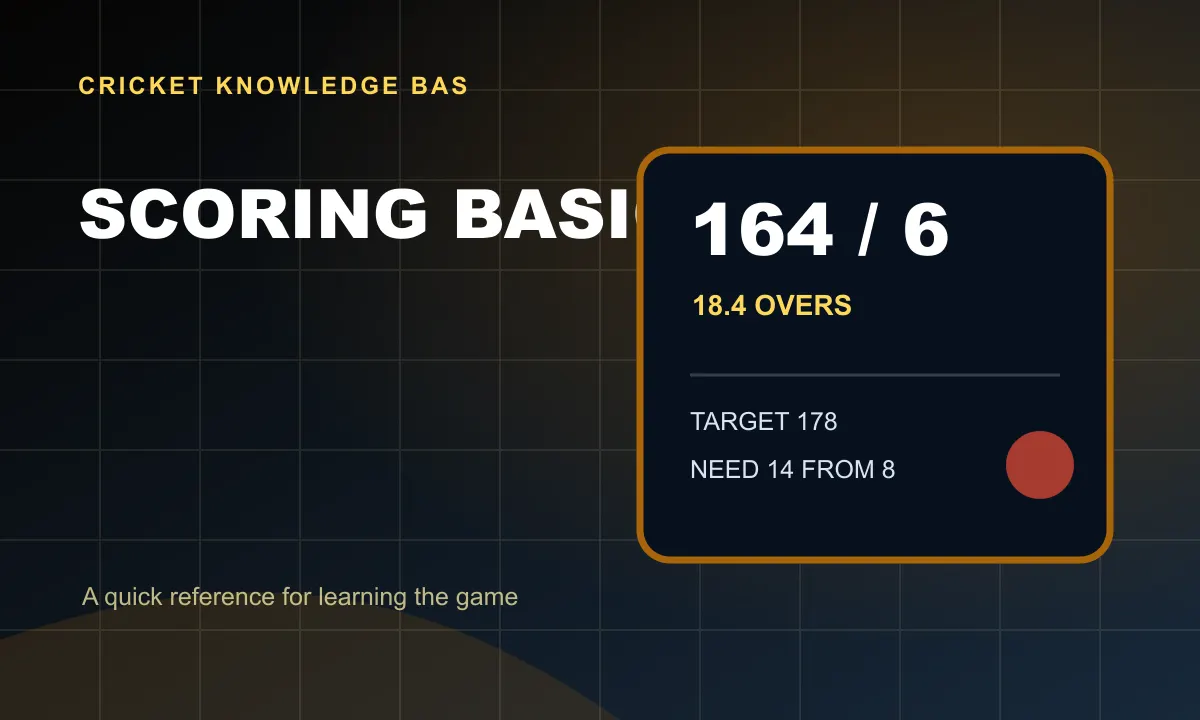
Start with a T20 because its one-innings, 20-over structure is compact. Choose one batting team and ask four questions: What is the score? How many wickets have fallen? How many overs are complete? If this is the chase, what is the target? Ignore advanced graphics until these answers feel automatic.
Notice how the match changes every six balls. A new over may bring a different bowler, a changed field and a new plan. Watch the striker rather than the ball alone: their footwork and bat angle reveal whether the intent is defence, placement or power.
The terms worth learning first
Learn boundary, over, innings, wicket, extra and run rate. A boundary is usually four or six; an over is six valid deliveries; an innings is a team’s turn to bat; a wicket is a dismissal; extras are team runs not credited to the bat; run rate is average runs per over.
Then add the most common dismissals: bowled, caught, LBW, run out and stumped. Commentary becomes much clearer once those words are familiar. Terms such as googly, reverse swing or silly mid-off can wait until the underlying contest makes sense.
How to try playing safely
Use a tennis ball or soft training ball, a light bat and visible markers for wickets. Shorten the pitch for children or first-time bowlers. Begin with paired drills: ten straight throws to hit, ten underarm catches and twelve attempts to bowl at a target. Technique improves faster when the task is simple and repeatable.
Move to a small-sided match of five overs per team. Limit each bowler to one over and rotate fielding positions so everyone participates. Agree rules before starting, especially what counts as a boundary, how wides are handled and whether batters retire at a set score.
Beginner mistakes to avoid
Do not treat every delivery as an invitation to hit hard. Good batting begins with balance, watching the ball and choosing an appropriate response. Bowlers should prioritize a repeatable action and safe accuracy rather than maximum speed. Fielders should stay ready before the ball is delivered, not react after contact.
When watching, avoid judging a player from one ball. Cricket is a sequence game in which pressure accumulates and plans unfold over overs or sessions. A batter leaving several balls can be controlling risk, and a bowler conceding a boundary can still win the contest by creating a wicket next ball.
How to learn this topic faster
Watch one short passage of play and narrate only the visible sequence: delivery, contact, run or dot ball, and any wicket. This prevents unfamiliar commentary from hiding the simple contest. On a second viewing, add field position and intent. Layering observations in this order builds a reliable mental model without requiring a law-book memory test.
For Cricket for Beginners: The Friendly Starting Point, connect how to watch your first match with the terms worth learning first. The first idea gives you the structure; the second shows how players or institutions act inside it. Then return to the quick-reference facts and explain each one in your own words. If a fact cannot yet be explained, follow the linked guide rather than memorizing the label.
A useful learning routine is to predict the next event before it happens. In a rules article, predict the umpire’s sequence. In a format article, predict how the batting side will spend its remaining balls. In history, predict which institution or technology made the next stage possible. Prediction turns passive reading into a test of understanding.
Key checkpoints
- Best first format: T20. Use this as a checkpoint when reading a scorecard, watching a match or explaining the topic to someone else.
- Four numbers to watch: Score, wickets, overs and target. Use this as a checkpoint when reading a scorecard, watching a match or explaining the topic to someone else.
- Useful roles: Batter, bowler, wicketkeeper and captain. Use this as a checkpoint when reading a scorecard, watching a match or explaining the topic to someone else.
- Basic shot result: Runs, dot ball or dismissal. Use this as a checkpoint when reading a scorecard, watching a match or explaining the topic to someone else.
- Recommended practice: Soft-ball cricket. Use this as a checkpoint when reading a scorecard, watching a match or explaining the topic to someone else.
- Core etiquette: Respect officials, opponents and the Spirit of Cricket. Use this as a checkpoint when reading a scorecard, watching a match or explaining the topic to someone else.
Common misconceptions
A common beginner mistake is to measure every action by excitement. A leave, defensive stroke or quiet over can be valuable when it protects a wicket or creates pressure. Another mistake is reading over notation as a decimal: 12.4 overs means 12 complete overs and four valid balls, not twelve and four-tenths.
When two sources appear to disagree about cricket for beginners, check their date, match format and definition. One may describe an older playing condition, a domestic variation or a different category of competition. Prefer the current MCC Laws and the relevant official playing conditions for formal decisions, and label uncertainty clearly in historical questions.
A practical example
Frequently asked questions
Which cricket format is easiest for beginners?
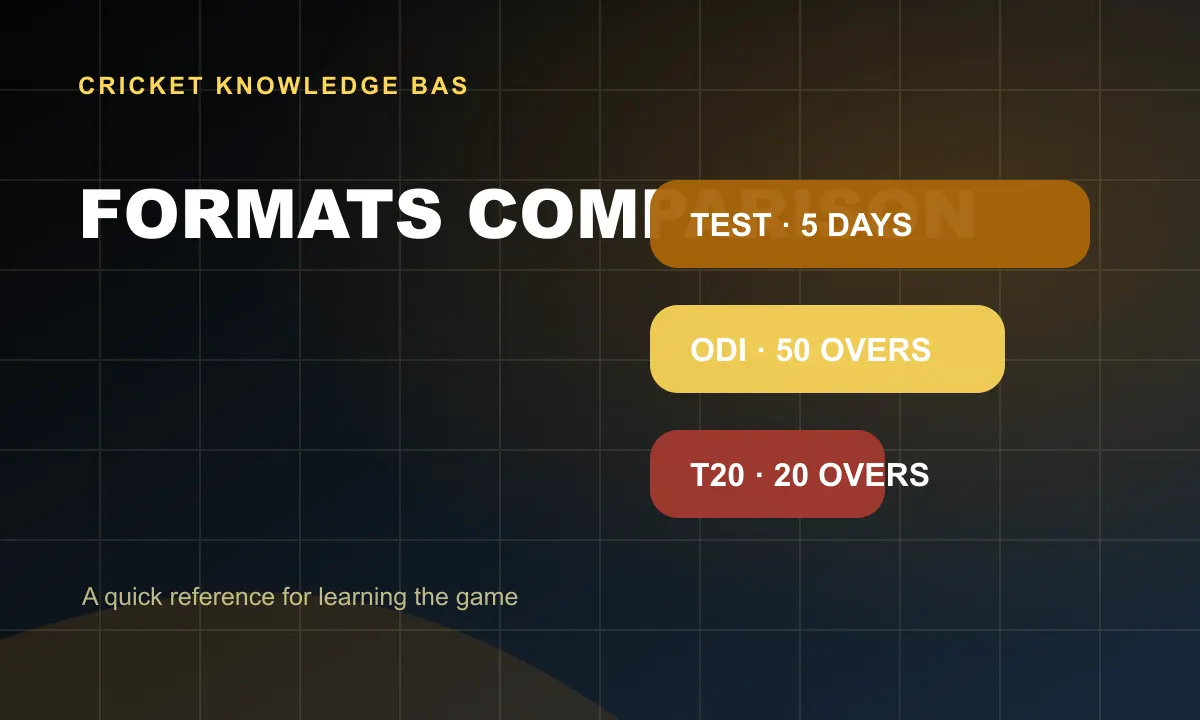
T20 is usually easiest to follow because each side receives 20 overs and the match lasts about three hours.
Do I need to understand LBW immediately?
No. First recognize that LBW can dismiss a batter when the body illegally prevents a ball that would have hit the wicket.
Can adults learn cricket late?
Yes. Recreational clubs often provide soft-ball, social and beginner sessions.
What should I watch on a scorecard?
Runs, wickets, overs, target and the current batters’ scores are enough at first.
Is cricket only popular in a few countries?
Its strongest traditions are concentrated in certain regions, but international and recreational cricket is played worldwide.
Conclusion
Give yourself permission to understand cricket in layers. Begin with the score and the outcome of each delivery, then learn roles, dismissals and tactics. A few overs of focused watching or a short soft-ball game will teach more than trying to memorize the entire law book.
Primary references
Rules and format details should always be checked against the current match or competition playing conditions.