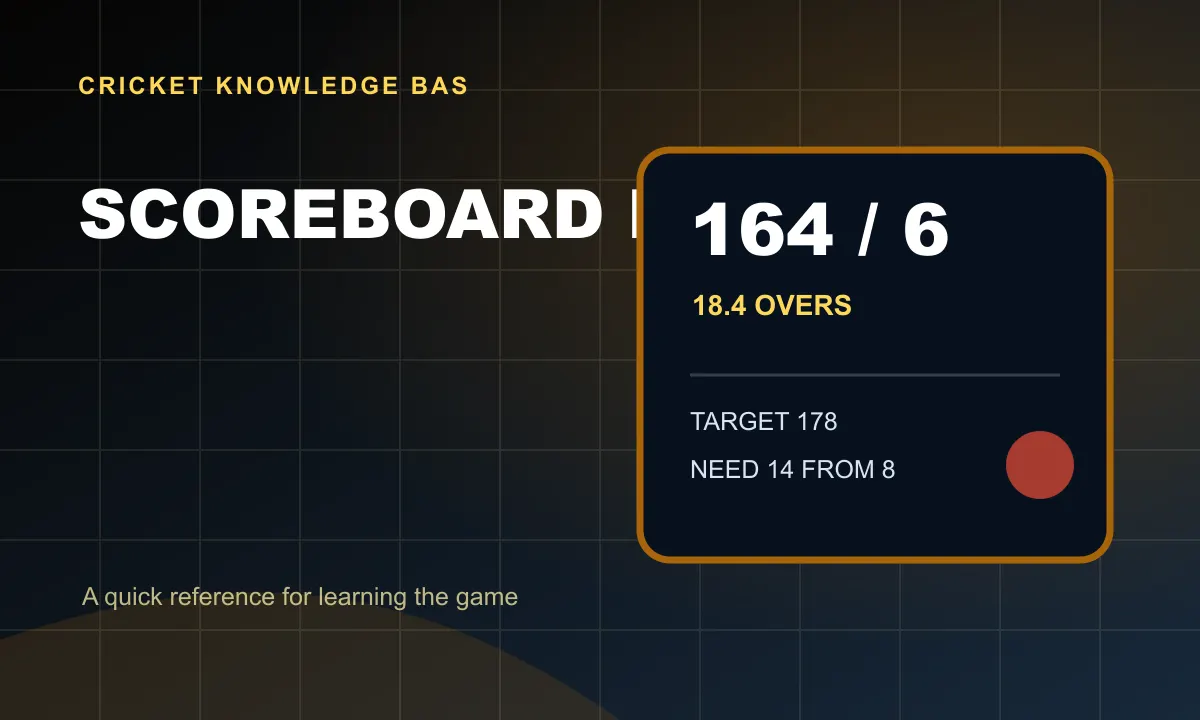
A cricket score records two resources at once: runs gained and wickets lost. The notation 178/5 means 178 runs for five wickets. Overs add the time dimension, while a target turns the second innings into a chase. Once those columns are clear, batting figures, bowling figures and extras provide the detail.
Quick reference
| Team score | Runs/wickets |
|---|---|
| Four | Boundary after the ball touches the ground |
| Six | Ball hit over the boundary on the full |
| Extras | Wides, no-balls, byes, leg byes and penalties |
| Strike rate | Runs per 100 balls |
| Economy rate | Runs conceded per over |
How batters score runs
Batters may complete runs by crossing and making good their ground at opposite ends while the ball is live. Runs hit from the bat are credited to the striker. Boundary allowances avoid the need to run: normally four when the ball reaches the rope after grounding and six when it crosses on the full from the bat.
The striker’s personal score counts bat runs but not every team run. A batter can face a delivery on which the team receives wides, byes or other extras without those runs being added to the batter’s total.
Understanding extras
A wide is a delivery the umpire judges beyond the striker’s reasonable reach under the applicable interpretation. A no-ball comes from an illegal delivery and carries an immediate penalty. Neither normally counts as a valid ball, so both can add runs and extend the over.
Byes are completed when the ball misses bat and body. Leg byes can be credited when the ball hits the batter’s person and the law’s conditions are met. Penalty runs arise from specified infringements. Scorecards separate these categories because responsibility differs between bowler, fielding side and team.
Reading batting and bowling figures
A batting line shows runs, balls faced, boundaries and strike rate. Strike rate equals runs divided by balls, multiplied by 100. A batter with 60 from 40 balls has a strike rate of 150. Context matters: that pace is aggressive in many formats but may be judged differently by match situation.
Bowling figures commonly show overs, maidens, runs conceded and wickets. Figures of 4–0–28–2 mean four overs, no maiden overs, 28 runs charged to the bowler and two wickets. Economy rate divides runs conceded by overs in ball-based terms.
Targets, margins and results
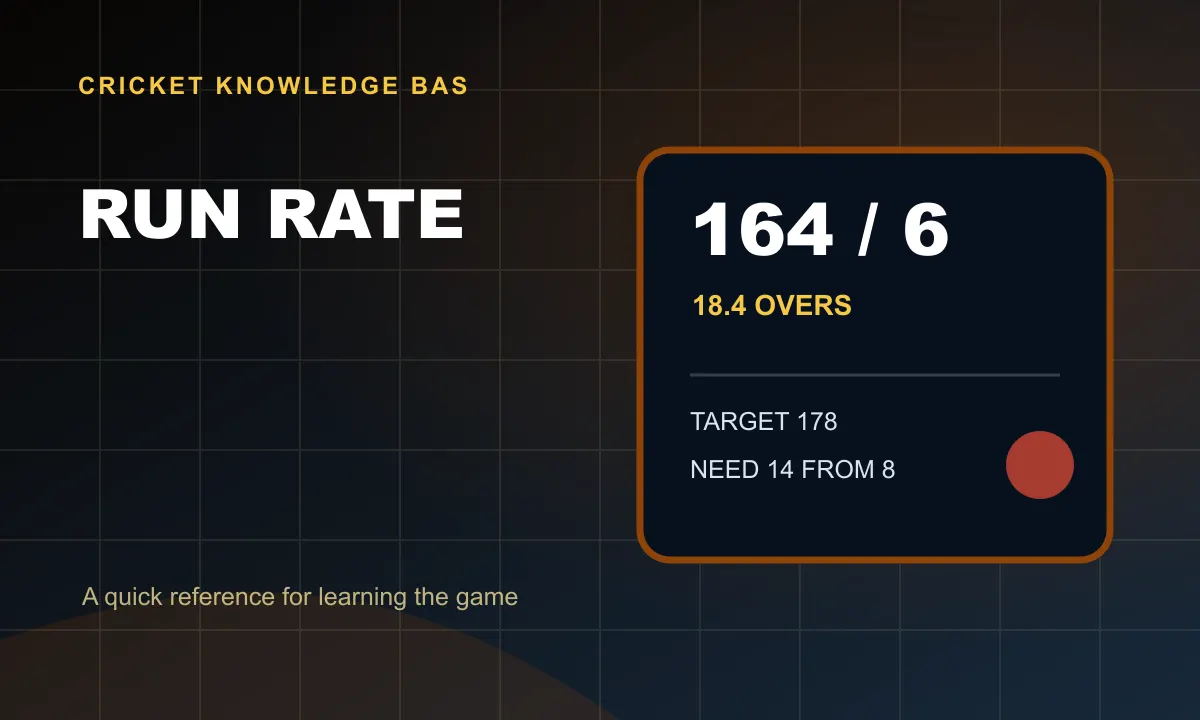
The chasing side normally needs one more run than the first side’s total. If it reaches the target with wickets available, the winning margin is stated in wickets. If it fails, the defending side’s margin is stated in runs. Equal completed scores can create a tie under the competition rules.
A result in Test cricket can also be described by runs, wickets or an innings. A team wins by an innings when its single innings total exceeds the opponent’s combined completed totals and the opponent has been dismissed twice.
How to learn this topic faster
Treat every ruling as a sequence rather than a slogan. First establish whether the ball was legal, then identify what happened while it was live, and finally apply the dismissal or scoring condition. For a formal match, the competition’s current playing conditions sit beside the Laws and may control field restrictions, reviews, free hits or rain adjustments.
For How Cricket Scoring Works, connect how batters score runs with understanding extras. The first idea gives you the structure; the second shows how players or institutions act inside it. Then return to the quick-reference facts and explain each one in your own words. If a fact cannot yet be explained, follow the linked guide rather than memorizing the label.
A useful learning routine is to predict the next event before it happens. In a rules article, predict the umpire’s sequence. In a format article, predict how the batting side will spend its remaining balls. In history, predict which institution or technology made the next stage possible. Prediction turns passive reading into a test of understanding.
Key checkpoints
- Team score: Runs/wickets. Use this as a checkpoint when reading a scorecard, watching a match or explaining the topic to someone else.
- Four: Boundary after the ball touches the ground. Use this as a checkpoint when reading a scorecard, watching a match or explaining the topic to someone else.
- Six: Ball hit over the boundary on the full. Use this as a checkpoint when reading a scorecard, watching a match or explaining the topic to someone else.
- Extras: Wides, no-balls, byes, leg byes and penalties. Use this as a checkpoint when reading a scorecard, watching a match or explaining the topic to someone else.
- Strike rate: Runs per 100 balls. Use this as a checkpoint when reading a scorecard, watching a match or explaining the topic to someone else.
- Economy rate: Runs conceded per over. Use this as a checkpoint when reading a scorecard, watching a match or explaining the topic to someone else.
Common misconceptions
Do not apply one remembered phrase without the surrounding conditions. A ball hitting the pad is not automatically LBW, a physical delivery is not automatically a valid ball, and an apparent boundary may still depend on how the ball reached or crossed the rope. Umpires decide the complete event, not a cropped replay frame.
When two sources appear to disagree about how to score cricket, check their date, match format and definition. One may describe an older playing condition, a domestic variation or a different category of competition. Prefer the current MCC Laws and the relevant official playing conditions for formal decisions, and label uncertainty clearly in historical questions.
A practical example
Frequently asked questions
What does 100/3 mean?
The team has scored 100 runs and lost three wickets.
What does 15.2 overs mean?
Fifteen complete overs plus two valid balls.
Are extras added to a batter’s score?
No. They add to the team total and are listed separately.
What is a maiden over?
An over in which no runs are charged to the bowler, subject to scoring treatment of certain extras.
How is net run rate calculated?
Competition rules compare a team’s scoring rate with the rate conceded across qualifying matches, with specific treatment for all-out innings.
Conclusion
Read a scorecard from the outside inward: team runs, wickets, overs and target first; individual batting, bowling and extras second. That order keeps the match situation visible and turns the detailed numbers into an explanation rather than a distraction.
Primary references
Rules and format details should always be checked against the current match or competition playing conditions.