Cricket’s exceptional popularity in India comes from a combination of history, national achievement, mass media, accessible informal play and a powerful domestic economy. The sport arrived through British colonial institutions, but Indian players, clubs, audiences and administrators transformed it into a distinctly local passion.
Quick reference
| Historical route | Introduced during British rule |
|---|---|
| Major national milestones | 1983 and 2011 men’s ODI World Cup wins |
| Domestic T20 driver | Indian Premier League |
| Everyday version | Tennis-ball and street cricket |
| Media strength | Television, mobile and multilingual coverage |
| Cultural effect | Shared national and regional identity |
From colonial sport to local institution
Cricket entered India through colonial ports, schools, military settings and clubs. Indian communities formed their own teams and competitions, and elite participation expanded. Over time the game became a field of local pride rather than simply an imported custom.
Post-independence international cricket gave national teams symbolic importance. Victories against established sides carried meaning beyond the scorecard and helped players become widely recognized public figures.
Iconic victories and star players
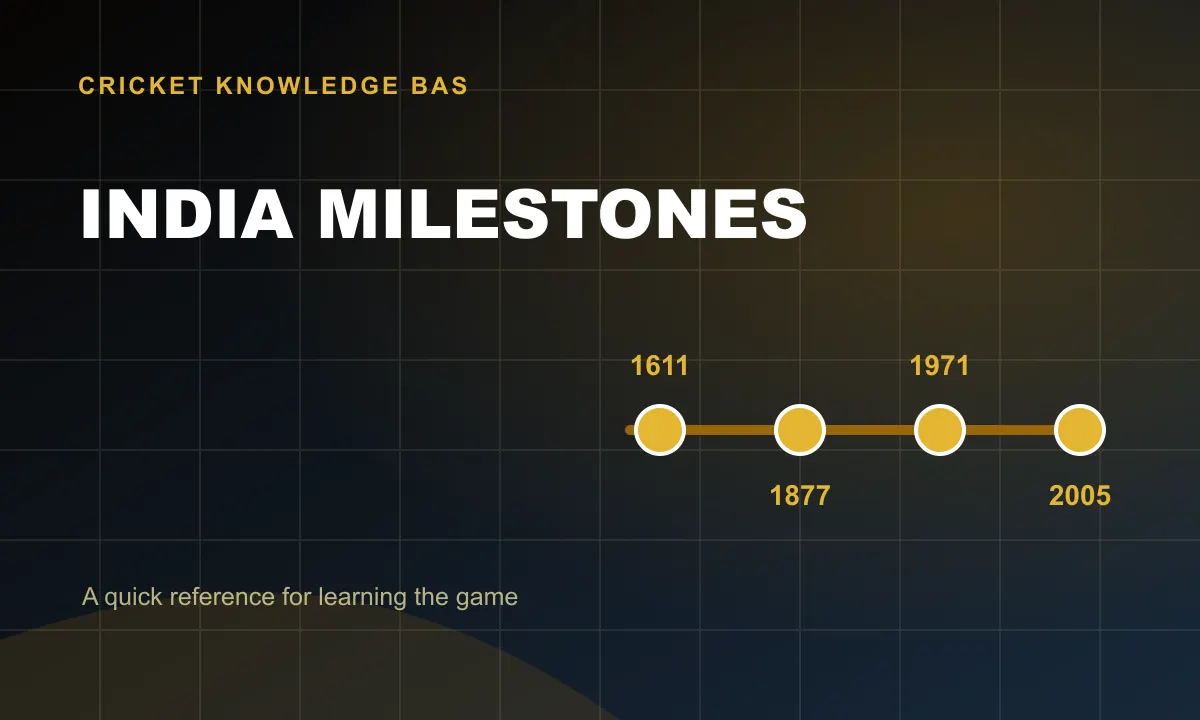
The 1983 men’s World Cup victory is widely regarded as a major turning point in mass interest. The 2011 home World Cup triumph created another shared national moment. Success in Tests, ODIs and T20s has kept different generations engaged.
Celebrated players provide stories that cross language and regional boundaries. Batting milestones, bowling spells and long careers make cricket part of everyday conversation and aspiration.
Media reach and the IPL
Television brought matches into homes at scale, while satellite channels and multilingual commentary expanded access. Smartphones, streaming and short video now let fans follow scores and highlights throughout the day.
The Indian Premier League combines city franchises, international players, evening scheduling and a compact T20 format. It creates annual narratives and connects regional loyalty with global talent.
Why playing access matters
A full cricket facility is not required for informal participation. Children and adults use tennis balls, taped balls, walls, lanes, courtyards and open grounds. Rules are adapted to local space—one-tip catches, straight boundaries or automatic outs for certain shots.
This daily participation creates knowledgeable audiences. People who have tried to bowl, bat or catch understand the difficulty behind professional performance, strengthening attachment to players and results.
How to learn this topic faster
Large popularity questions rarely have one cause. Separate historical distribution, everyday participation, media reach, elite success and local identity. These factors reinforce one another, but their strength varies by place and generation. A balanced explanation avoids reducing living cricket cultures to a single tournament or television figure.
For Why Cricket Is India’s Favorite Sport, connect from colonial sport to local institution with iconic victories and star players. The first idea gives you the structure; the second shows how players or institutions act inside it. Then return to the quick-reference facts and explain each one in your own words. If a fact cannot yet be explained, follow the linked guide rather than memorizing the label.
A useful learning routine is to predict the next event before it happens. In a rules article, predict the umpire’s sequence. In a format article, predict how the batting side will spend its remaining balls. In history, predict which institution or technology made the next stage possible. Prediction turns passive reading into a test of understanding.
Key checkpoints
- Historical route: Introduced during British rule. Use this as a checkpoint when reading a scorecard, watching a match or explaining the topic to someone else.
- Major national milestones: 1983 and 2011 men’s ODI World Cup wins. Use this as a checkpoint when reading a scorecard, watching a match or explaining the topic to someone else.
- Domestic T20 driver: Indian Premier League. Use this as a checkpoint when reading a scorecard, watching a match or explaining the topic to someone else.
- Everyday version: Tennis-ball and street cricket. Use this as a checkpoint when reading a scorecard, watching a match or explaining the topic to someone else.
- Media strength: Television, mobile and multilingual coverage. Use this as a checkpoint when reading a scorecard, watching a match or explaining the topic to someone else.
- Cultural effect: Shared national and regional identity. Use this as a checkpoint when reading a scorecard, watching a match or explaining the topic to someone else.
Common misconceptions
Audience size alone does not explain affection for a sport. Popularity includes how often people play, how families and communities share matches, how heroes are remembered and how easily the game adapts to local space. Treating one country or format as the whole story misses that layered ecosystem.
When two sources appear to disagree about why cricket is famous in india, check their date, match format and definition. One may describe an older playing condition, a domestic variation or a different category of competition. Prefer the current MCC Laws and the relevant official playing conditions for formal decisions, and label uncertainty clearly in historical questions.
A practical example
Frequently asked questions
Did cricket start in India?
No. It originated in England and was introduced to India during British rule.
What made cricket nationally popular in India?
Historical institutions, iconic international victories, star players, television and accessible informal play all contributed.
Why is the IPL influential?
It combines a short format, city identities, international players, major media reach and an annual schedule.
Is cricket popular across every Indian region?
Popularity and local sporting traditions vary, but cricket has unusually broad national reach.
Why is street cricket important?
It lowers equipment and facility barriers and gives millions of people direct experience of the game.
Conclusion
India did not merely inherit cricket; it remade the sport through mass participation, national achievement, media and domestic innovation. Its popularity is sustained from both directions—global stars and tournaments at the top, improvised everyday games at the base.
Primary references
Rules and format details should always be checked against the current match or competition playing conditions.